A Coming-of-Age Story Meets Hollywood Legacy
Hollywood loves a good origin story, but few are built from the actual celluloid scraps of a legend’s childhood. The Fabelmans isn’t just a movie about growing up-it’s a Cinematic self-portrait Painted with the same precision that defined decades of blockbuster storytelling. It follows a young artist’s first sparks of obsession, the kind that turns family vacations into impromptu shoots and home movies into emotional time capsules.
You don’t need to know the director’s name to feel the weight behind every frame. This is the rare film where the act of making movies isn’t just a subplot-it’s the heartbeat. The young protagonist doesn’t just Watch films; he dissects them, rebuilds them, and uses them to make sense of his parents’ quiet fractures and fleeting joys. It’s less about fame and more about Understanding people through the lens.
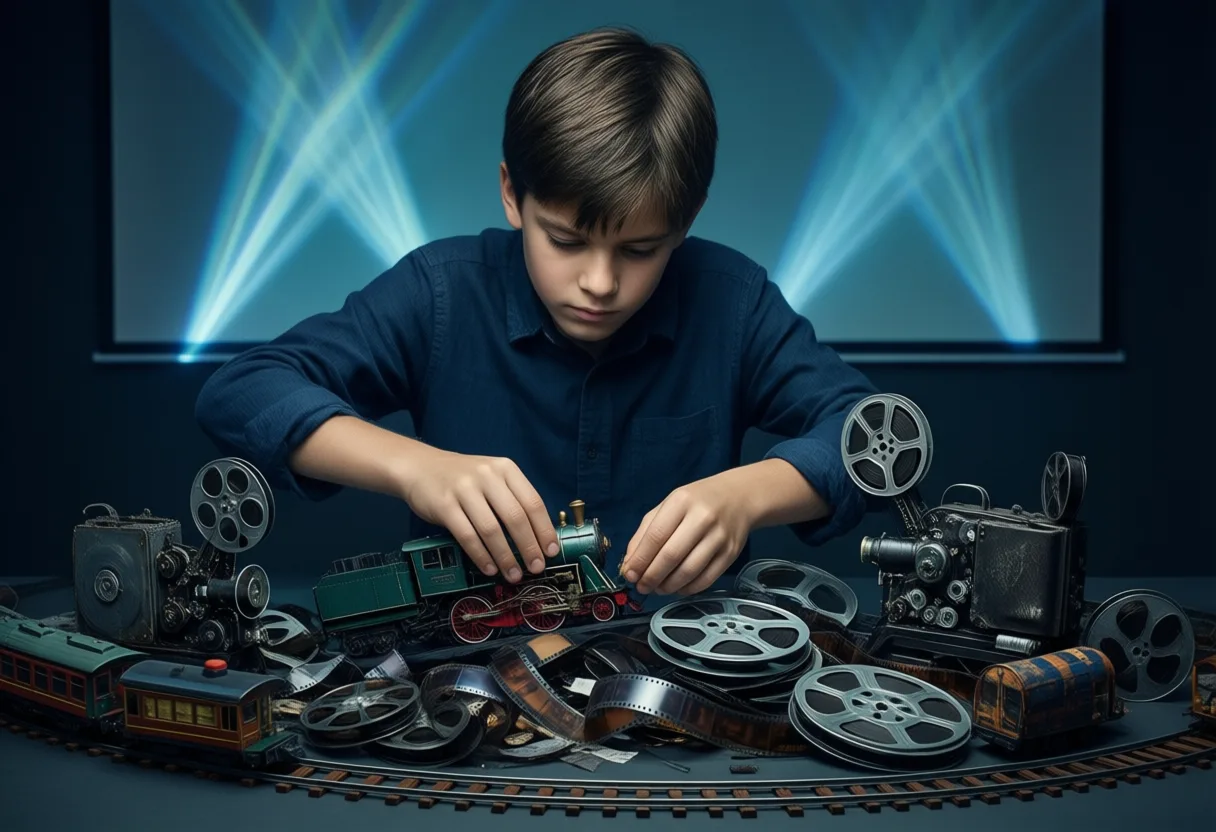
There’s a moment-simple, quiet-where a Boy watches A train wreck scene in a theater and then races home to recreate it with his toy train set. That restless energy, the need to See it again, control it, master it, is the engine of the entire film. And now, that same story is finding new life in a place far from the silver screen: the living room, the late-night scroll, the pause-and-rewind freedom of streaming.
Why This Spielberg Memoir Resonates Beyond the Screen
Most directors spend their careers hiding behind the camera. Here, the curtain Pulls back-not with confession, but with clarity. The story doesn’t shout its truths; it lets them emerge in the space between a father’s stoic silence and a mother’s restless hands. It’s about The quiet chaos of family, the kind that doesn’t explode but simmers beneath holidays, road trips, and dinner-table small talk.
Ambitious men know this tension well-the balancing act between duty and desire, logic and passion. The father represents the world of reason, engineering, the measurable. The mother embodies art, intuition, the unspoken. And the son? He’s caught in the middle, using a camera not to escape, but to Translate. Every shot he frames is an attempt to reconcile two forces that can’t quite coexist.
This isn’t just a filmmaker’s memoir. It’s a Blueprint for creative survival In a world that often rewards conformity. The protagonist doesn’t rebel with fists or fury-he edits. He cuts, splices, replays. He finds power not in confrontation, but in control of the narrative. That’s a lesson worth studying, whether you’re building a company, a relationship, or a life.
From Film Reels to Streaming Frames: A Natural Transition
There’s irony in a film so deeply rooted in the tactile magic of analog-spools of film, projectors humming in dark rooms-now living in the digital ether. But the transition feels right. The Fabelmans was never just about the tools; it was about the Urge To create, no matter the medium. Today’s version of that kid with a camera might be a teenager with a phone and a dream, editing clips in bed at 2 a.m.
Streaming flattens the hierarchy of access. You don’t need a premiere invite or a theater ticket. You need a screen and a moment. And in that moment, the film becomes more intimate, more immediate. Watching it at home lets you lean in-pause on a glance, rewind a gesture, sit with the silence between notes in the score.
Consider the modern man’s media diet: fast, fragmented, disposable. This film demands the opposite. It asks you to slow down, to notice how light falls across a face, how a hand trembles before a decision. On Peacock, it’s not competing with billboards or traffic. It’s waiting, patient, for you to Press play and actually watch.
What Sets This Behind-the-Scenes Access Apart
Behind-the-scenes features usually serve as bonus content-fun, but forgettable. This one feels essential. It doesn’t just show you the sets or the script pages; it reveals the emotional scaffolding. You see the real-life inspirations sitting across from the actors who played them, the quiet awe in their eyes. It’s not promotion. It’s Witnessing a handoff of memory.
The footage captures moments you can’t fake: a director guiding his younger self’s story with the tenderness of someone revisiting a wound that’s finally healed. There are no grand speeches, just quiet nods, shared laughter, the occasional tear wiped fast. You realize this wasn’t just a movie to make-it was one he Needed To make.
What stands out is the lack of ego. No behind-the-scenes bravado, no “this was the hardest shot.” Instead, you get: - A focus on collaboration, not control - Honest conversations about family pain - The joy of solving problems with craft, not cash
It’s a masterclass in restraint-on screen and off.
Family, Art, and the Cost of Vision
Every great artist steals from life. The difference here is that the thief is also the child. The film doesn’t flinch from showing the cost of obsession-how the camera becomes a shield, a distraction, sometimes a weapon. The mother’s unraveling isn’t dramatized for effect; it’s observed, frame by frame, through the lens of a son who loves her but can’t save her.
Art doesn’t always heal. Sometimes it just Records. And that’s enough. The Fabelmans doesn’t offer tidy resolutions. The parents don’t reconcile. The kid doesn’t win a trophy. But he finishes the film. He shows it. He survives the silence after the final frame. That’s the victory.
For men raised to fix, to provide, to stay quiet-this is radical. It says: You don’t have to solve it. You just have to see it clearly. That clarity, that refusal to look away, is where power begins. Whether you’re dealing with a failing marriage, a stalled career, or your own inner noise, the lesson is the same-frame it, study it, then decide what to do next.

How the Craft Mirrors the Childhood Obsession
There’s a sequence where the young filmmaker discovers the power of editing to manipulate emotion. He cuts his parents’ vacation footage in a way that reveals a truth he didn’t know how to voice: his mother’s growing distance from his father. The camera didn’t lie-but the Way He used it told a deeper truth.
This is where craft becomes language. The tools-light, sound, timing-are not just technical. They’re emotional instruments. And the film shows how early that fluency develops. It’s not taught in school. It’s born from watching, repeating, failing, trying again.
The obsession isn’t glamorous. It’s lonely. It’s staying up too late, spending money on film stock instead of clothes, being called “weird” by classmates. But it’s also The only thing that makes sense. For the driven man, that feeling is familiar-the project that consumes you, the idea that won’t let go, the work that feels less like a job and more like breathing.
Streaming Brings New Life to a Director’s Origin Story
Releasing a personal film on a streaming platform changes the rhythm of reception. There’s no opening weekend pressure, no box office numbers to haunt it. Instead, it seeps in-discovered, recommended, revisited. It becomes part of the cultural background, the kind of movie someone says, “You should watch this. It’s... Different.”
At home, without the ritual of the theater, the film becomes more personal. You’re not surrounded by strangers in the dark. You’re on your couch, maybe with a drink, maybe alone. The story isn’t projected-it’s shared. And that intimacy matches the film’s tone perfectly.
It’s the ideal way to experience a story about memory, family, and self-discovery. You can watch it once, then return weeks later, catching something new-a line, a look, a decision that echoes your own life. Streaming doesn’t diminish the art. It Extends its lifespan, turning a single viewing into a series of quiet revelations.

Not Just a Director’s Cut-A Deeper Emotional Cut
This isn’t a film about fame or fortune. It’s about the moment a boy realizes he sees the world differently-and that difference might be his greatest asset. The “director’s cut” here isn’t about restored Scenes Or extended runtimes. It’s about Emotional honesty, the kind that only comes when you’re no longer running from your past.
The behind-the-scenes content amplifies this. You see the adult looking back, not with regret, but with gratitude. Even the pain is framed as necessary-the friction that sparked the fire. There’s no bitterness, just clarity. And that’s rare.
For men who’ve been taught to bury feeling, to “move on,” this is a quiet rebellion. It says: Look back. Edit. Revisit. Understand. Your story isn’t something to escape. It’s the raw material of everything you build from here.
Why Audiences Are Rediscovering the Film at Home
People are watching it alone. They’re pausing. They’re thinking. They’re texting a friend: “This scene-man, it got me.” That’s the power of context. At home, without the pressure to “get it” or “love it,” the film can work slowly, like a good bourbon or a long conversation.
It’s not a casual watch. It demands attention. But in return, it offers something few films do: The feeling of being truly seen. Not flattered, not entertained, but Seen. The awkwardness, the longing, the quiet heroism of just trying to understand your parents-and yourself.
And let’s be real: not every man wants to cry in a theater. But at home, with the lights low and the world outside, it’s safe to let a moment land. That’s where this film finds its audience-not in applause, but in silence after the credits.
The Last Shot: When a Movie Becomes a Legacy
Great films don’t end when the screen goes dark. They linger-in conversations, in choices, in the way you see your own life a little more clearly. The Fabelmans isn’t just a look back. It’s a Torch passed, not through words, but through feeling.
It reminds us that the things we obsess over-the hobbies, the projects, the late-night ideas-are not distractions. They’re clues. They’re the map to who we really are. And sometimes, the most powerful thing you can do is keep filming, keep writing, keep building, even when no one’s watching.
Because one day, someone will. And they’ll see not just the work-but the man behind it.
A Closer Look at The Fabelmans on Peacock
Behind the Camera and the Story
Steven Spielberg drew directly from his own childhood to create The Fabelmans, making it one of the most personal films of his legendary career. The character Sammy Fabelman is a clear stand-in for a young Spielberg, with many scenes mirroring real moments from the director’s early life, including his first experiences making home movies. It’s not just a fictional tale-it’s a heartfelt homage to the power of family, art, and the magic of cinema that shaped him.
Michelle Williams delivers a deeply moving performance as Mitzi Fabelman, inspired by Spielberg’s mother, Leah Adler. Her portrayal captures the spirit of a gifted pianist turned homemaker whose passion for the arts profoundly influences her son’s creative path. Meanwhile, the film’s technical brilliance shines through its cinematography by Janusz Kamiński, a longtime Spielberg collaborator, whose work subtly shifts visual styles to reflect different eras and emotional tones throughout Sammy’s journey.
One fun detail: the train crash scene that young Sammy recreates with his model train set is based on an actual event Spielberg filmed as a kid. He used tiny figures and clever editing to simulate destruction-proof that even at a young age, he had an instinct for storytelling through the lens. Now streaming on Peacock, the film also includes behind-the-scenes content that reveals how the cast connected with their real-life counterparts, adding another layer to this intimate cinematic portrait. Explore more stories, videos, and creators on Loaded.
Frequently Asked Questions
What is The Fabelmans about?
The Fabelmans is a coming-of-age story following a young artist’s early obsession with filmmaking and how he uses the camera to understand his family’s quiet tensions and emotional fractures.
Is The Fabelmans based on a true story?
Yes, it is drawn directly from Steven Spielberg’s childhood. The character Sammy Fabelman mirrors Spielberg’s early life, including his first experiences making home movies and his parents’ complex relationship.
Where can I watch The Fabelmans?
The Fabelmans is now streaming on Peacock, along with behind-the-scenes content that explores the emotional roots of the story and its real-life inspirations.
What makes the behind-the-scenes content special?
It reveals the emotional scaffolding of the film, showing real-life inspirations meeting the actors who portrayed them and capturing quiet, authentic moments of reflection, collaboration, and healing.
This article was produced with AI assistance. How Granite Magazine uses AI.
Quinn explores the nuances of men’s fashion and personal care with a focus on timeless elegance and modern practicality. They emphasize sustainable choices, intelligent design, and the psychology behind how men present themselves in evolving social landscapes.